


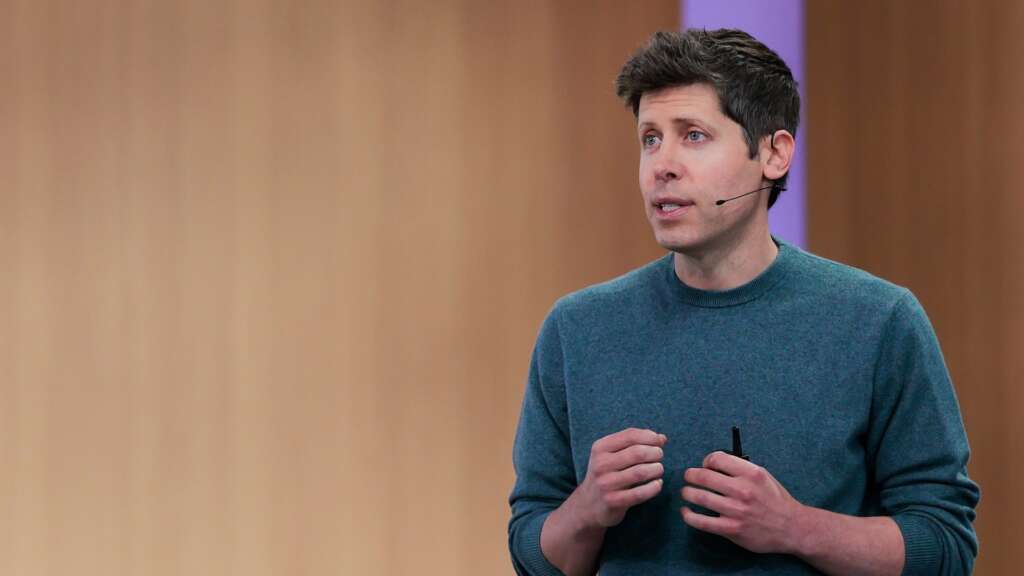


In a recent interview on the Cheeky Pint podcast, OpenAI CEO Sam Altman expressed his concerns about the trend of running AI models locally, asserting that it diverts critical memory resources from data centers. He emphasized the need for maximum cloud utilization in today’s supply-constrained environment, stating, “You want maximum utilization in the cloud if you’re trying to deal with this very supply-constrained environment. And somehow, many people’s intuition is the opposite of that.”
While companies like Nvidia and Microsoft advocate for the advantages of utilizing new PC hardware with substantial memory for local AI, Altman pointed out that local processing, although it offers improved privacy, poses a threat to the business models of major AI providers, including OpenAI. He noted, “A lot of people want local inference. And somehow, they assume that the problem is solved now because we are going to have open-source models. We’re going to be able to run them on our computers. And so we’re not going to need all the stuff in the data center.” Altman argued that this perspective is flawed, as it results in individuals hoarding a significant portion of the world’s limited DRAM supply, using it only a fraction of the time.
Altman’s remarks come amidst an ongoing memory shortage that is projected to last until 2030. When questioned about the state of solutions for this issue, he candidly responded, “Bad.” He believes this demand should inspire new companies to focus on memory production, a concept likened to economist Adam Smith’s idea of the “invisible hand,” which typically improves market conditions. However, Altman expressed skepticism, stating, “I think the invisible hand is failing right now,” and emphasized that the memory industry should carefully consider new manufacturing capacities to avoid over-investment and potential market gluts.
As the memory shortage continues, new PCs optimized for local AI, such as Nvidia’s RTX Spark laptops, remain costly, likely delaying widespread adoption until prices decrease.
Disclosure: Ziff Davis, parent company of PCMag, has filed a lawsuit against OpenAI in April 2025, claiming that OpenAI infringed on Ziff Davis copyrights in the training and operation of its AI systems.

