


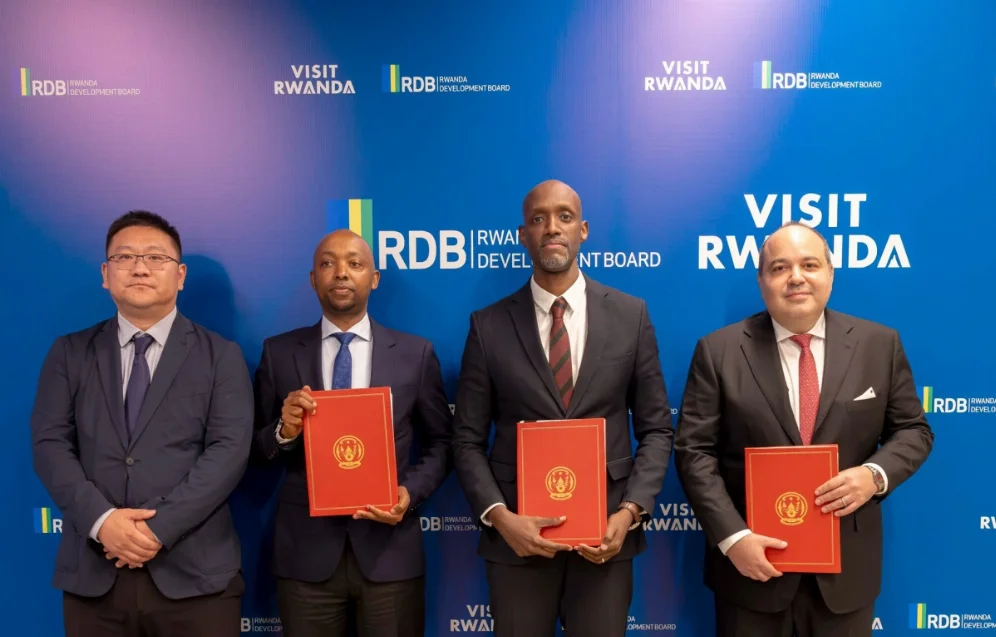
The Rwanda Development Board has entered into a significant partnership with Chery Holding Rwanda and Ecofleet Solutions, aiming to set up an electric vehicle assembly plant in the country. This initiative will also facilitate the local assembly of over 200 electric buses, with reports indicating a commitment to produce 300 vehicles. Additionally, the project includes the establishment of an electric goods transport fleet, aligning with Rwanda’s ambitions to electrify public transport while promoting domestic manufacturing.
On October 31, Rwanda Development Board’s CEO, Jean Guy Afrika, signed the agreements with Ecofleet Solutions’ CEO, Aubin Rukera, and Chery Holding Rwanda’s CEO, Mohammed Hady N. Tabriz. This agreement formalizes a project that has been in discussions for over a year. Earlier, in April 2025, a memorandum of understanding was signed between the Rwanda Development Board and Chery Holding Group, covering areas such as electric mobility and green energy. Subsequent discussions between President Paul Kagame and Chery executives in April 2026 led to the approval of the strategic investment agreement by the Cabinet on September 18.
This investment is crucial as it addresses a common challenge faced by automotive manufacturing in smaller African economies, where producing vehicles is often unsustainable due to low domestic demand. By linking the assembly plant to a confirmed need for electric buses, Chery is assured of an initial customer base, allowing for a more stable production environment.
While related reports suggest a commitment of 300 electric buses, some sources describe the project as involving more than 200 buses. The agreements also encompass resource mobilization for an electric goods transport fleet, expanding the project’s scope beyond just passenger vehicles. This broader focus is vital for establishing a more substantial industrial presence, as a factory dedicated solely to public buses would have a limited impact.
Rwanda’s Strategy for Industrial Development
Rwanda’s strategy emphasizes the integration of public transport demand with industrial development. Instead of waiting for market conditions to favor vehicle assembly, the government is aligning production with existing transport needs. This approach mitigates some of the uncertainties that typically accompany the establishment of automotive operations.
Rwanda has been actively enhancing the public transport fleet in Kigali, increasing bus availability and optimizing routes to ease commuter pressure. As electric mobility becomes a more prominent aspect of national transport policy, the agreement with Chery represents a pivotal moment that could see domestically assembled vehicles bolster the public transport system.
By assembling buses locally, Rwanda can retain more economic value within the country. Although some components like batteries and motors may still be imported initially, local assembly allows for expenditure on labor, logistics, and technical services to benefit the Rwandan economy. Over time, as local sourcing increases, the economic advantages will grow significantly.
The Importance of Manufacturing Depth
The nature of automotive assembly varies widely. While some operations involve minimal local work, others can cultivate extensive supply chains with domestically produced components. Rwanda’s economic benefits will hinge on how far the Chery project can progress along this spectrum. A basic assembly line may provide jobs but would largely rely on imported vehicle parts, whereas a more integrated manufacturing operation could enhance employment opportunities and reduce foreign exchange dependencies.
The government’s ability to steer this progression will be influenced by production volume. Suppliers are less likely to invest in local production for a factory with low output. However, if Chery’s operations expand to include passenger vehicles and commercial fleets for Rwanda and neighboring countries, local component production becomes more viable.
Regional Opportunities and Economic Impact
Rwanda’s electric bus initiative also has broader implications for reducing dependence on imported fuel. By substituting electric buses for traditional diesel vehicles, Rwanda can diminish its vulnerability to global oil price fluctuations. Buses are ideally suited for electrification due to their predictable routes and high daily usage, which can accelerate fuel savings.
The economic feasibility of this transition will depend on several factors, including electricity pricing and charging infrastructure. Electric buses may require a considerable upfront investment, but they typically incur lower energy and maintenance costs over time.
Chery’s shift from merely selling vehicles to engaging in local assembly represents a significant commitment. This partnership will likely spur demand for ancillary services such as logistics, maintenance, and technical support, creating a more extensive economic ecosystem around the assembly plant.
Challenges Ahead and Future Prospects
While the agreement establishes a solid foundation by tying production to identifiable demand, the long-term viability of the project will depend on subsequent orders beyond the initial bus assembly. Public procurement strategies will be crucial in providing a stable demand base.
Rwanda has the potential to produce competitively priced electric vehicles for the broader East African market, but this will depend on various factors, including production costs, tariff regulations, and competition from other regional automotive initiatives.
In conclusion, the agreements signed on October 31 present Rwanda with a promising start to combining public transport expansion, electric mobility, and local manufacturing. However, the true measure of success will be determined by how effectively Rwanda can develop local capabilities and integrate them into a sustainable automotive manufacturing ecosystem.

