


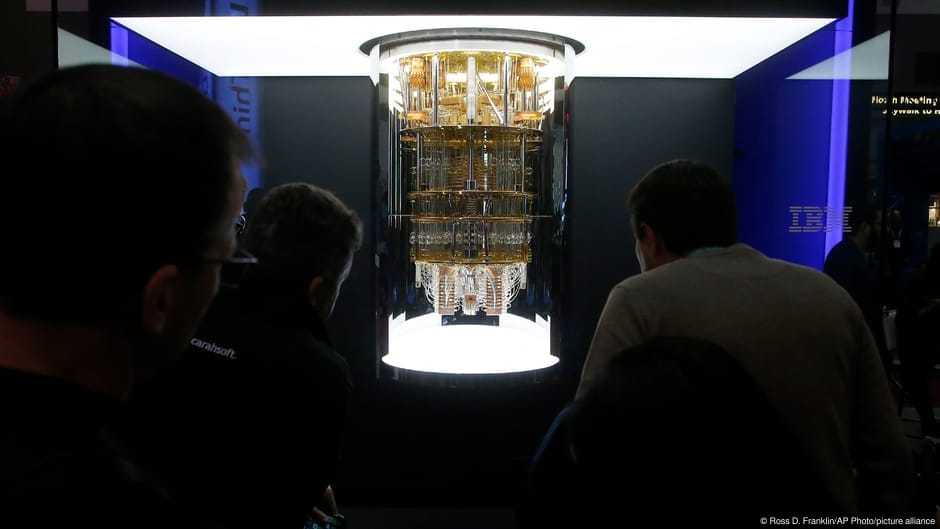
The European Commission has unveiled a proposal for a €50 billion (approximately $54.73 billion) equity financing fund aimed at enhancing the development of artificial intelligence and quantum computing across Europe. This initiative, referred to as the “Quantum Act,” seeks to position Europe competitively against both the United States and China in the rapidly evolving tech landscape.
EU tech chief Henna Virkkunen emphasized the urgency of this initiative, stating, “Quantum technologies will shape the future of industry, security and innovation, and they will have a profound impact on our societies. Europe needs to accelerate now.” She described the proposed fund as a “sufficient starting point” for achieving these ambitious goals.
Strengthening Europe’s Quantum Sector
The introduction of the Sovereign Tech Equity Fund coincides with new regulations designed to bolster the European quantum technology sector. These regulations will encourage public authorities to prioritize European firms when awarding contracts and funding.
Moreover, the EU aims to decrease its reliance on external countries, particularly in light of concerns that U.S. firms might implement “kill switches” to disable their products in Europe.
The Importance of Quantum Computing
Quantum computing remains in its infancy, with both the U.S. and China vying for leadership in this field. Unlike classical computers that use bits (either 0 or 1), quantum computers utilize qubits, which can exist in multiple states simultaneously. This unique capability allows quantum machines to potentially solve intricate problems at speeds far beyond those of today’s supercomputers.
The European Union anticipates that advancements in quantum computing could lead to significant innovations in various domains, including drug development, early medical diagnoses, and the creation of super-efficient batteries, as well as advancements in artificial intelligence.
Challenges and Opportunities
While the prospects of quantum technology are promising, they also introduce cybersecurity challenges, particularly regarding the security of digital data, as quantum computing could compromise existing encryption methods. Notably, Europe is home to about one-third of the world’s quantum companies, yet private funding for European quantum start-ups has reached only €1.1 billion, significantly less than the €7 billion secured by their U.S. counterparts.
The EU’s “Quantum Europe” strategy, launched in July 2025, aims to establish the region as a global leader in quantum technologies by 2030. Although Europe excels in quantum research, it faces hurdles in converting this research into commercially viable solutions.
The proposed legislation will undergo negotiations with EU member states and the European Parliament in the coming months before it can be enacted into law.

