


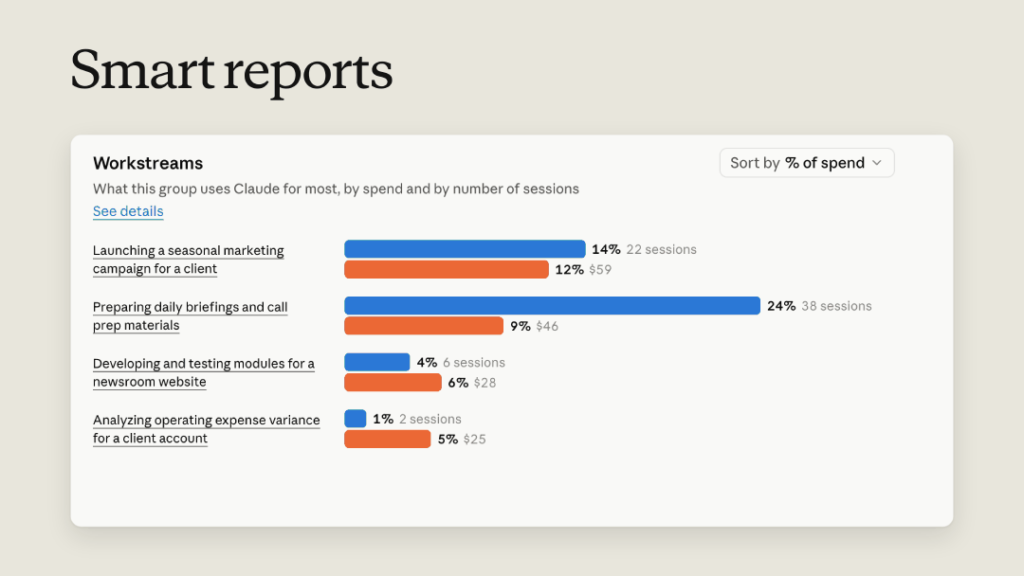

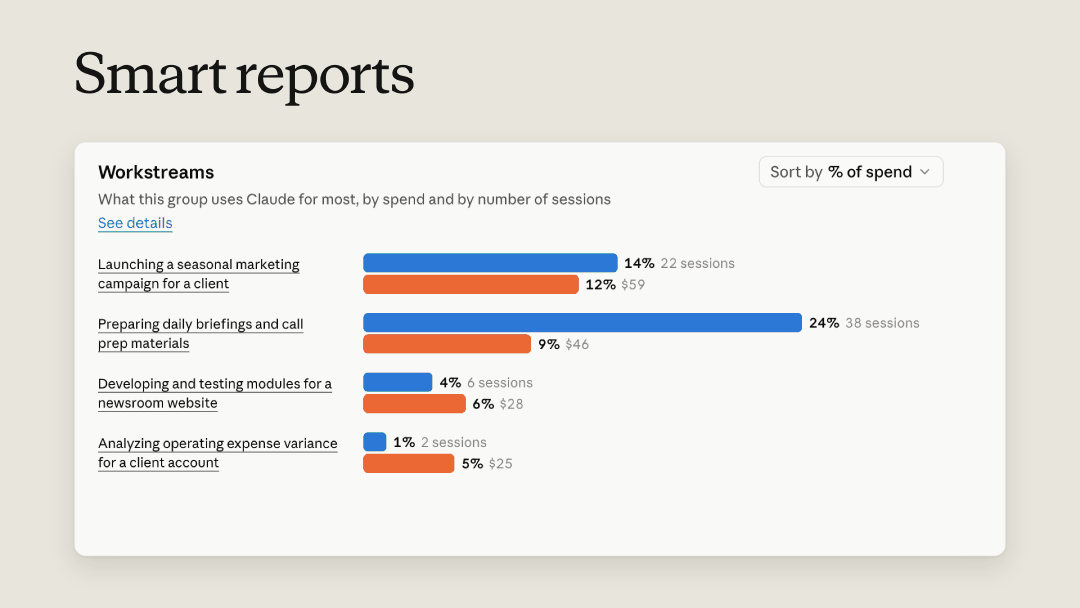
Anthropic has introduced new tools aimed at helping companies understand their AI expenditure, reinforcing the success of its coding tool, Claude Code. Recently, the company reported an operating profit for the second quarter and an impressive 900% net revenue retention, indicating that spending from existing customers surged nine-fold from Q3 2025 to Q3 2026.
With a focus on retaining enterprise users, Anthropic’s latest suite of reporting tools provides customers with detailed insights into the value derived from their token investments. By leveraging internal analytics and employee feedback, managers can assess team productivity over specific periods, evaluate output, analyze costs, and identify workflow inefficiencies. Anthropic assures that this data will not be used for model training by default. Additionally, the reports will include suggestions for improving performance.
This initiative reflects Anthropic’s commitment to demonstrating the return on investment (ROI) of its tools, addressing a crucial concern for large enterprises. Moreover, the company is establishing pooled group budgets to facilitate better management of token spending.
As businesses strive to optimize their use of AI tools, there is a growing demand for such insights. While venture-backed firms are leading in token expenditure, many Fortune 500 companies have yet to see significant benefits from AI deployment.
A recent report by Jellyfish, a tool provider for software developers, analyzed data from 276,000 users of agentic coding tools. It revealed that Claude Code and other Anthropic-based tools accounted for nearly one-third of all proposed code changes. Notably, spending on these tools has skyrocketed tenfold since the year’s start, now representing approximately 2% of total engineering costs. Nicholas Arcolano, Jellyfish’s chief scientist, emphasized that while 2% may seem small, the rapid growth was unexpected for many CFOs. He noted the importance of optimizing AI investments rather than merely increasing spending.
Anthropic’s new reporting features address this optimization challenge. While Anthropic holds a leading position among enterprise clients, pinpointing what makes an agentic coding tool indispensable remains complex. Despite the potential competition from OpenAI’s Astra model, Anthropic’s adoption rates have remained strong.
Jellyfish’s AI product lead, Nikolas Albarran, remarked on the competitive landscape, noting that while perceptions in the tech industry might suggest a heated rivalry, Anthropic’s solid enterprise strategies and established practices have made it difficult for customers to switch tools without significant effort. He highlighted the ongoing investments by major AI labs in forward-deployed engineering (FDE) teams, which offer embedded AI consulting within client organizations. Anthropic’s new reporting tools can be viewed as a simplified version of this hands-on assistance for its customers.
Albarran concluded, stating that as AI technology matures, the difficulty of switching tools increases, given the investment and effort already expended by businesses.

