


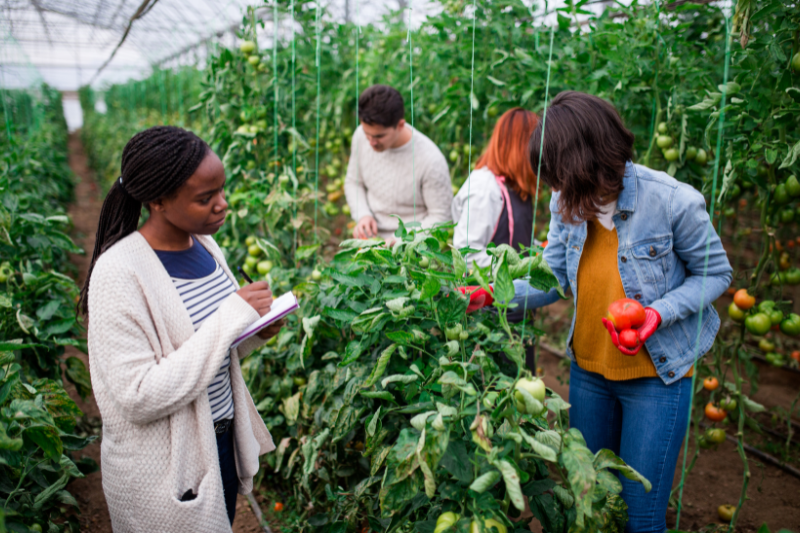
Agriculture remains central to Rwanda’s economy and to the livelihoods of millions of people. But the tools available to farmers are changing. Smartphones, digital payments, weather data, artificial intelligence and precision farming technologies are creating new ways to manage crops, reach markets and make better decisions.
For Rwanda, where agricultural land is limited and productivity is important to both household incomes and food security, technology could play an increasingly valuable role. The opportunity is not to replace traditional farming knowledge, but to give farmers better information and better tools.
Better information
Farming has always involved uncertainty. Weather can change, pests can damage crops and market prices can move between planting and harvest. Technology cannot remove those risks, but it can help farmers respond to them earlier.
More accurate weather information, for example, can help farmers decide when to plant, irrigate or harvest. Digital soil information can provide a clearer picture of moisture and growing conditions, while satellite imagery can help monitor larger areas of farmland and identify changes that may be difficult to see from the ground.
Artificial intelligence could make this information even more useful. Instead of simply presenting farmers with large amounts of data, AI systems can analyse it and provide practical recommendations.
A farmer who discovers unusual marks on a crop could, for example, photograph the plant with a smartphone. An AI-powered service could analyse the image, suggest what disease or pest may be responsible and recommend whether further advice is needed.
For this technology to make a real difference in Rwanda, however, it needs to be affordable, reliable and easy to understand. A sophisticated system has little value if the farmer cannot use the information it provides.
Farming by phone
Some of the most important agricultural technology may not be expensive machinery. It could be the mobile phone.
Digital services can connect farmers with weather forecasts, agricultural advice, financial services and potential buyers. Mobile payments can also make transactions easier and create better records of a farmer’s income and business activity.
Market information is particularly important. Farmers do not only need to grow successfully; they need to sell successfully.
A digital platform that allows a farmer or cooperative to see where demand exists, compare prices and communicate directly with buyers could reduce some of the uncertainty surrounding the sale of produce.
The same technology could benefit buyers. Hotels, restaurants, retailers and food processors need reliable information about what produce is available, where it is located and when it can be delivered.
Connecting these different parts of the agricultural economy more efficiently could reduce waste while helping farmers reach a larger market.
Rwanda can build the technology
Agricultural technology also presents an opportunity for Rwanda’s growing technology sector.
The country does not have to depend entirely on solutions developed abroad. Rwandan entrepreneurs can build products around the problems they see in their own communities.
A developer working with farmers in Musanze, Nyagatare or Huye may understand challenges that are difficult to appreciate from thousands of kilometres away. Local entrepreneurs understand language, affordability, connectivity and the realities of how people conduct business.
There are opportunities to develop technology for irrigation, crop monitoring, farm management, agricultural marketplaces, logistics, insurance, financing and food supply chains.
This could also create a different path into technology entrepreneurship for young Rwandans. Agriculture offers real problems with real customers, and many of those problems are shared by farmers elsewhere in Africa.
A solution developed successfully in Rwanda may therefore have opportunities well beyond the country’s borders.
Keeping farmers at the centre
Technology alone will not transform agriculture.
Farmers need access to devices and connectivity, but they also need training and confidence in the systems they are being asked to use. Services must work in local languages, including Kinyarwanda, and the cost must make sense for the people expected to pay for them.
Technology should also complement the knowledge farmers already possess. Generations of experience with particular crops, soils and local conditions should not be dismissed simply because a digital system has become available.
The most effective approach will combine that experience with better information.
Rwanda has already shown how digital technology can change areas such as payments and access to public services. Agriculture presents another opportunity, but success is likely to come through practical improvements rather than one dramatic invention.
Better weather information can improve planting decisions. Digital markets can connect farmers with buyers. AI can help identify crop problems earlier. Smarter irrigation can reduce wasted water. Digital financial records can improve access to services.
Individually, these changes may appear modest. Across thousands of farms, their impact could be substantial.
For Rwanda, the future of agriculture does not have to mean abandoning the farming knowledge built over generations. It can mean combining that knowledge with modern technology to help farmers produce more efficiently, reduce losses and earn more from their work.

