
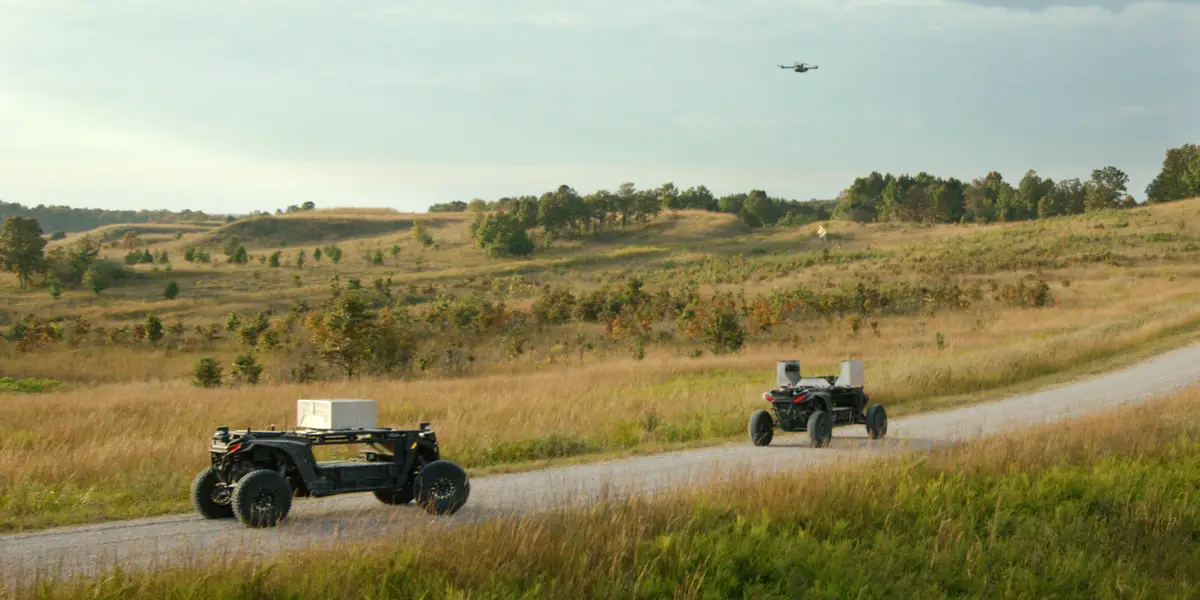
The Pentagon’s Defense Advanced Research Projects Agency (DARPA) recently conducted tests on autonomous ground vehicles (UGVs) capable of locating enemy targets without relying on GPS. This innovative program aims to enhance the operational capabilities of the U.S. military in contested environments.
RACER Program Demonstration at Fort Knox
During an exercise at Fort Knox, Kentucky, DARPA evaluated the effectiveness of four UGVs as part of its Robotic Autonomy in Complex Environments with Resiliency (RACER) program. These ground robots were tasked with independently surveying the area and identifying potential threats while a human operator remained informed and in control from a safe distance.
According to Jason Gregory, a technical advisor at DARPA, the initiative focuses on advancing tactical capabilities while prioritizing human safety. The operator maintained oversight, assigning tasks to the UGVs and determining how to engage identified targets based on the robots’ findings.
Operating Without GPS
A key aspect of the recent tests involved ensuring that the UGVs could navigate and operate without GPS support. The vehicles utilized onboard sensors to create real-time maps of their surroundings, a crucial capability for future military operations where GPS may be compromised.
As part of the demonstration, one UGV halted upon detecting a potential target, prompting the human operator to simulate a strike on the identified object. This scenario highlighted the importance of human judgment in operational decision-making.
Future Implications for Military Operations
The RACER program not only seeks to improve the functionality of UGVs but also aims to share insights with the broader military and industry. By addressing challenges presented by various terrains and environmental conditions, such as deserts and swamps, DARPA is paving the way for more adaptable and resilient robotic systems.
Overall, this initiative illustrates a significant step forward in the integration of autonomous technologies within the military, emphasizing the need for human oversight and collaboration between technology and personnel.